双色球
PLA Air Force trains with Belarus, Thailand, Egypt in three regions, displaying strategic reach beyond homeland defense: expert_我的网站

A | 水是构成人体成分的重要物质并发挥着重要的生理作用,足量饮水是保障身体健康的基础,也能帮我们维持正常的身体活动和认知能力。近期,《美国国家科学院院刊》发布了一项惊人研究,揭示每升瓶装水中平均含有约24万个可检出的塑料微粒,并且,瓶装水在我们反复开关以及高温暴晒的条件下会使水中含有更多的微塑料。这些纳米级的塑料颗粒能够进入我们的肠道或肺部细胞,进而穿越血液,抵达心脏和大脑,甚至对孕妇而言,它们能穿越胎盘,进入胎儿体内。

B |
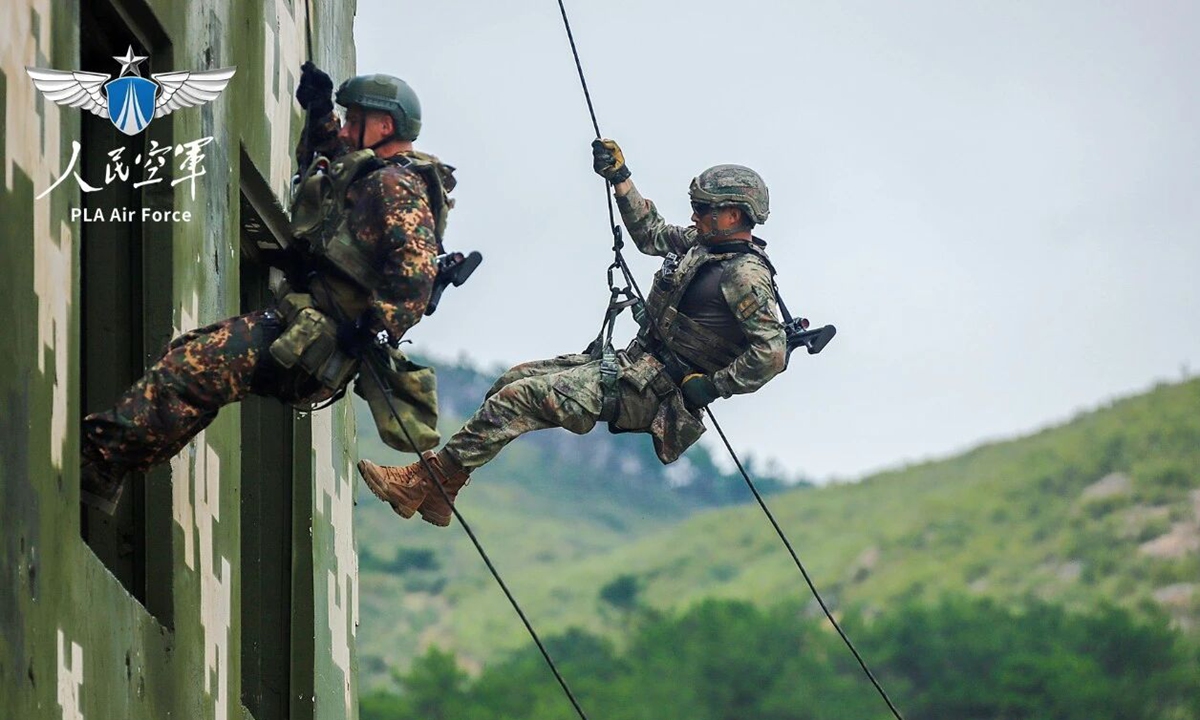
Airmen take part in the China-Belarus Swift Eagle 2026 joint training at an air force base in China in August 2026. Photo: PLA Air ForceIn August, the Chinese People's Liberation Army (PLA) Air Force is actively conducting joint training with three countries - Belarus, Thailand and Egypt - across three distant regions, with some training content and footage already released by official sources.
A Chinese military affairs expert said the simultaneous execution of different exercises in three countries demonstrates the PLA Air Force's strategic capabilities, extending beyond homeland deployment to overseas missions.
The PLA Air Force announced on Thursday that the China-Belarus Swift Eagle 2026 airborne joint training, which opened at a PLA Air Force training center on August 12, entered its comprehensive exercise phase on Wednesday.
Earlier, participating troops from both sides had completed basic training and coordinated refinement at the training center, laying a solid foundation for the exercise upgrade, said the PLA Air Force.
During the earlier training phase, Chinese and Belarusian troops were organized into mixed groups, learning from each other and conducting specialized drills on designated subjects. Between missions, the two sides also organized friendly sports activities, including football and tug-of-war matches, along with other cultural exchange events.
As planned, the next phase will feature full-element comprehensive drills in a combat-realistic setting, focusing on honing joint command and coordinated operational capabilities, deepening practical military cooperation, and jointly enhancing the ability to conduct joint counter-terrorism missions, said the PLA Air Force.
This marks the fourth iteration of the "Swift Eagle" series joint training between China and Belarus. Details on the equipment deployed by both sides have not yet been disclosed.
Wang Ya'nan, editor-in-chief of the Beijing-based Aerospace Knowledge magazine, told the Global Times that Belarus is likely to follow its traditional practices, focusing on low-altitude small-scale airborne operations, possibly using Il-76 large transport aircraft, while China might deploy Y-9 or Y-20 transport aircraft for low-altitude delivery.
The joint training is not a one-way learning exercise, but rather a process of building a cooperative foundation and familiarizing both sides with each other's operational habits in the counter-terrorism domain, Wang Ya'nan said.
Shortly before the China-Belarus drill entered its new phase, Senior Colonel Chen Xi, spokesperson for China's Ministry of National Defense, announced on August 14 that from mid-August to early September, the Chinese and Egyptian air forces would hold the Eagles of Civilization 2026 joint training in Egypt.
The training will focus on subjects such as air combat tactics, air superiority operations, and combat search and rescue, and will include force employment drills. As the second iteration of its kind, the joint training will further enhance mutual trust and traditional friendship, deepen substantive cooperation between the Chinese and Egyptian militaries, and contribute to regional peace and stability, Chen said.
In May 2025, Ministry of National Defense spokesperson Senior Colonel Zhang Xiaogang briefed that from April 17 to May 4 of that year, the air forces of China and Egypt held the first "Eagles of Civilization 2025" joint training at an Egyptian air force base.
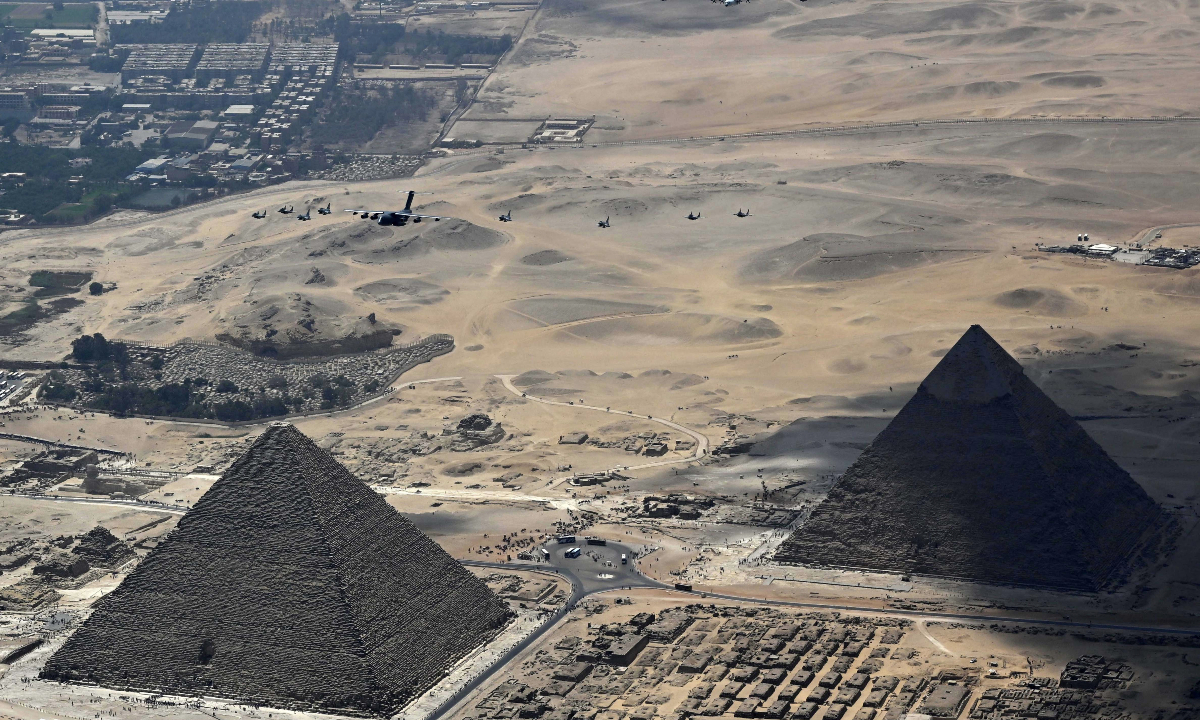
Some of the main warplanes participating in the China-Egypt "Eagles of Civilization 2025" joint air force exercise form formation and fly over the Pyramids at very low altitudes in Cairo, Egypt on May 1, 2025. Photo: Courtesy of the Chinese People's Liberation Army (PLA) Air ForceThe Chinese Air Force dispatched J-10C, KJ-500 and YY-20 aircraft to participate in the training. This was the first time that China sent force packages to Africa for joint training, during which the two sides conducted drills on such subjects as air superiority operations, suppression of enemy air defenses (SEAD), battlefield search and rescue, and mixed grouping. Discussions and exchanges on training models, air combat tactics and aerial refueling were also held, Zhang said.
Wang Yunfei, a Chinese military affairs expert, told the Global Times on Thursday that China and Egypt enjoy good military relations, and their joint exercise further enhanced mutual understanding and friendship.
The two countries' air forces share some similar training methods and tactics, and the joint exercise could pave the way for potential equipment cooperation in the future, Wang Yunfei said, noting that the Egyptian side will get an opportunity to closely observe the Chinese warplanes' capabilities.
Wang Yunfei also mentioned that, as flying to Egypt is a long-distance flight, such maneuvers could boost the PLA Air Force's long-distance combat capabilities and adaptability to diverse environments in different regions.
Meanwhile, the Chinese and Thai militaries are holding the Falcon Strike 2026 joint air force training in Thailand in August.
The Chinese side will send multiple types of aircraft and units, including ground-based air defense forces. The two sides will train on subjects such as joint air defense and humanitarian assistance and disaster relief. The training marks the ninth of its kind between the two air forces and is aimed at further deepening the traditional friendship and practical cooperation between China and Thailand, Senior Colonel Jiang Bin, a spokesperson for the Ministry of National Defense, said on July 30.
According to a video posted by state broadcaster CCTV on August 13, China's Y-20 transport aircraft, J-10C fighter jets and J-10S fighter-trainers, and JAS 39 Gripen fighter jets and Alpha Jet light attack/trainer aircraft from Thailand participated in the drill.
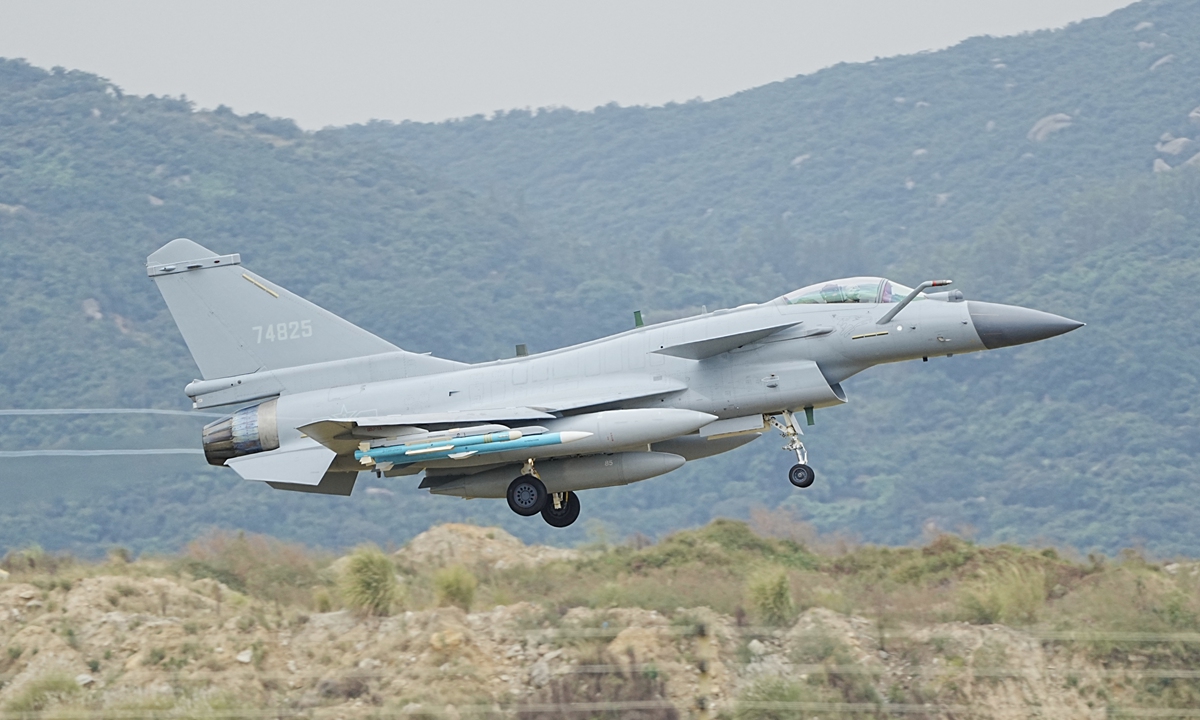
A J-10C fighter jet Photo: VCGAccording to Wang Ya'nan, the simultaneous execution of different exercises in three countries demonstrates the PLA Air Force's strategic reach. The ability to conduct concurrent joint training with Belarus in China, Thailand in Southeast Asia and Egypt in Africa reflects the PLA Air Force's growing capacity for global engagement and rapid deployment.
The Zhisheng (Victory) documentary series released around Army Day also showcased the PLA Air Force's capabilities.
Footage revealed the systematic application of three types of UAVs providing intelligence support to the PLA Army, Navy and Rocket Force, with the GJ-3A armed reconnaissance drone making its first public appearance. The footage also showed an H-6N bomber carrying a large missile under its fuselage, which a Chinese expert said could be a powerful air-launched ballistic missile capable of conducting anti-ship or ground-strike missions. Some reports identified the large missile as the nuclear-capable JL-1.
The PLA Air Force is building a modern force that is versatile, agile and capable of operating across domains, ready to safeguard China's national interests and contribute to regional peace, Wang Ya'nan noted.
。

C | 那么,面对这样的污染,我们如何保障自己的饮水安全呢?把水烧开能否有效降低微塑料的含量呢? 1.微塑料对人体有什么危害? 微塑料是指直径小于5毫米的塑料颗粒,更小尺寸的还有微米、纳米级的微塑料,因此它也被统称为微纳塑料(MNPs)。

D | 微塑料来源于生产和生活,如汽车轮胎与路面摩擦、化妆品成分、洗衣废水以及塑料垃圾在陆地和海洋漂流中碰撞、分解等,都会产生大量微塑料。 随着研究的深入,目前微塑料的概念已经扩大到从纳米到毫米的范畴(1毫米等于1000微米;1微米等于1000纳米),而且是形状多样的非均匀塑料颗粒混合体,肉眼难以分辨。微塑料对人体健康的潜在影响:包括可能诱发氧化应激、促进炎症、内分泌紊乱和代谢紊乱等,从而增加多种疾病发生风险。

E | 2.把水烧开是一种简单有效降低微塑料含量的方法 近期关于瓶装水中微塑料的研究结果令人震惊,这让我们不得不重新审视我们的饮水习惯。对于大多数家庭来说,把水烧开是一种简单且有效的杀菌方法。 关于微塑料,烧开水确实能在一定程度上降低其含量。

F | 当水被烧开时,微塑料颗粒会与水中的碳酸钙结合,形成沉淀物。通过简单的过滤,我们可以去除高达84%的微塑料。因此,把水烧开再喝,确实是一个降低微塑料摄入的有效方法。 当水被加热至沸腾时,微塑料颗粒由于密度和大小的差异,会与水中的其他物质发生分离,一部分会沉淀到水底。因此,在烧开水之后,如果条件允许,我们可以使用过滤器或纱布进行简单的过滤,进一步减少水中的微塑料颗粒。 3.如何保证饮水安全? (1)选择质量好的瓶装水:购买瓶装水时,注意查看产品标签和认证信息,选择有质量保证的品牌。避免购买来源不明或价格过于低廉的瓶装水。 (2)定期更换水壶和水杯:即使是高质量的水壶和水杯,长期使用也可能磨损,导致微塑料产生。建议定期更换,保持清洁。 (3)安装家用净水器:安装家用净水器可以有效去除水中的杂质和微塑料颗粒,提供更安全的饮用水。 (4)使用不锈钢或玻璃材质水壶:烧水更安全,因为这些材质不易释放微塑料颗粒。 所以,我们要尽量避免使用塑料水壶,尤其是在高温下,塑料中的化学物质可能会加速分解,增加微塑料的风险。

G | 减塑降碳。图源:卡乐图片(摄影/宁颖) 4.减少微塑料摄入的生活小妙招 科学家建议,由于微塑料主要通过饮食和器具进入人体,一些生活方式也有助于减少微塑料的摄入。 (1)尽量减少选用预包装食品,特别是加工程度非常高的食品。

H | 每一个加工过程都可能会增加食品当中微塑料的含量,尽可能吃一些原型的食物,同时减少塑料容器包装的食品摄入。 (2)平时不食用动物、鱼类的内脏。

I | 海洋本身就存在着微塑料的污染,鱼类以及海产品长期生活在这个环境中,所含的微塑料就会更高,经常食用海鲜或者深海鱼,摄入微塑料的含量也会增多。

J | (3)减少外卖和快餐的摄入。外卖和快餐包装中常含有大量塑料,不仅可能产生微塑料,还可能含有其他有害物质。尽量自己做饭,既健康又环保。 (4)不粘锅出现划痕后尽量不要再用。

K | 大多数不粘锅的不粘涂层通常是聚四氟乙烯,也就是特氟龙,属于一种合成塑料。当炊具表面和硬物之间有强烈磨损时,可能会形成微小的聚四氟乙烯颗粒,然后污染食物被人类摄食。别用不粘锅烹调质地坚硬的食物,比如排骨,不使用尖锐的铲子,并定期更换新锅。 (透视社综合中国青年报、北京日报、封面新闻、“科普中国”微信公众号报道) 编辑:李煦、廖明娟(实习) 校对:李旭颖 审核:龚紫陌。
Current article:http://km3sf8.bomanglangsugangunxileba.cyou/6t0o/20260826/4109.html
Published on:20:59:53




 发表于 03:47:54
 QQ好友和群
 QQ空间
QQ空间 腾讯微博
腾讯微博 腾讯朋友
腾讯朋友 收藏
收藏 支持
支持 反对
反对
 发表于 09:21:14


